 This post continues the travel tales of my archaeology study in Ireland. TAfter leaving the Glen, I traveled to the Sligo area, accompanied by a Canadian woman from my class. After settling in Strandhill, a gorgeous seaside village outside of Sligo town, we headed to Maeve’s cairn, called Knocknarea, atop a mountain from which one can see for miles in every direction. This is the burial site of Maeve, legendary Queen of Connaught, where she is said to have been buried standing upright, according to her own instructions, to “better face her enemies in Ulster”. Her legend and history is full of adventure and bravery, with one of the best known stories “The Cattle Raid of Cooley”, starring Maeve as the leader of the raid. Sitting on top of the mountain next to the cairn, which has yet to be excavated, one can only imagine what her life was like, this stuff of legends- wars, raids, murder, glory, laughter, zest. A sudden and fiercely strong wind came up as I sat there, and lasted only a minute or two. I like to imagine that she was answering some of my questions.
The next day was spent with a visual artist named Martin Byrne, who draws much of his inspiration from the ancient tombs, ritual sites and rock art of Ireland. Martin has a gift for guiding and storytelling also, and we spent the day visiting a variety of sacred sites including the Caves of Keshcorran, St. Kevin’s altar, St. Laissir’s Holy Well, and Carrowtemple, where we took rubbings of the ancient standing grave slabs. 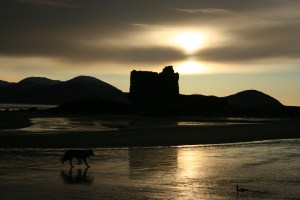 Every moment was filled with tales and legends as
  we drove through the Irish countryside connecting stories to places. An interesting few hours were spent in Martin’s studio looking at his artwork in progress. The huge rubbings he has taken from many of the megalithic sites are brought back to his studio, then painted as he imagines they once were. The rock art takes on a vibrancy and life that alters it considerably, and indeed there is evidence that color was used in the initial presentation. It certainly lends more possibility to the theory that shamans used the rock art for initiation sites as well as for trance work, as the pieces are exceptionally kinetic and seem to jump off the page. Martin also works in woodcut, wood carving, clay, drawing, and environmental art. He created a piece in Galway Bay in an effort to raise awareness of the pollutants in the bay, through a huge stone “medicine wheel”. The healing sculpture is seen when the tide recedes. It was exciting to spend time with an contemporary artist using ancient art for his inspiration, and to talk about ways of working with these ideas, stories and symbolism. An interesting note: Martin lives next door to the “Donkey Sanctuary”, which was started by a woman who rescued one from abusive conditions. It has now grown to house about 40 donkeys from all over Ireland, who need a home due to neglect, abandonment or sickness. There is a sister site near Cork for those donkeys in improved condition, and the entire endeavor is truly to be commended, existing primarily on donations and good will.
Next I stopped at the Claypipe Center, where a rich history surrounds this town of Knockcroghery. For over 250 years the village was famous for the production of the tobacco clay pipe, or “duidin” (Pronounced doodeen). The center provided a look at the production, from preparing the clay to firing in a wood fueled kiln in saggars. I was able to watch the pipes being made in heavy iron molds by a woman who recounted the history of the village and process as she worked. I loved the story of how essential the pipe was at a wake. Families prided themselves on the size of a wake when someone close passed away, and it often lasted 2 days and 2 nights. As soon as the person died, relatives purchased the “funeral expenses”, which included porter, whiskey, snuff, tobacco, clay pipes, tea, jam, bread, and candles. A gross of pipes (144) or more were purchased and filled with tobacco, and one was given to each man and woman upon arriving. As it was taken, it was customary to say “Lord have mercy”, and a pipe actually became a “Lord ha mercy” by name. Throughout the wake the pipe was smoked, and when it came time to leave, the person smashed it outdoors, symbolically releasing the spirit of the person to heaven. The end of the claypipe industry came to an abrupt halt in June of 1921, when the village was burned down by the English “Black and Tans” during the War of Independence. Only three buildings were left standing- the rectory, which soldiers took over, the post office, and a widow’s home, who pleaded with them not to burn her place. Once again, the politics and history intertwine with the art and culture. One popular pipe style was engraved with the words “Who fears to speak of ‘98″ on its side. This refers to the Irish rebellion against the English in 1798, and was a satisfying and sly way to carry political pride and Irish loyalty in an unobtrusive manner. The claypipe factory has been revived in the same building in which it began, and many of the authentic, original designs are being made again.

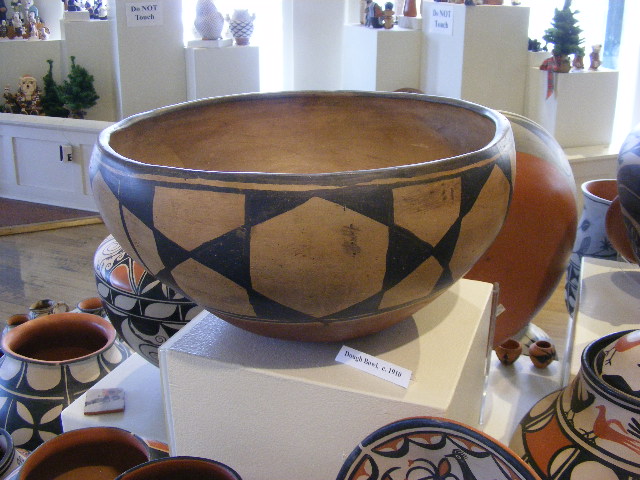
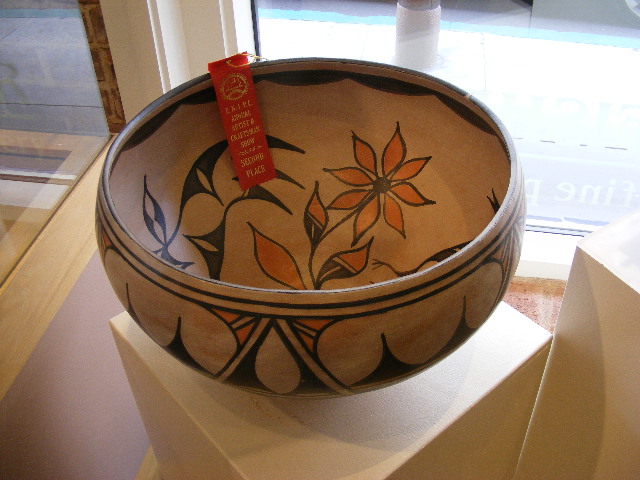
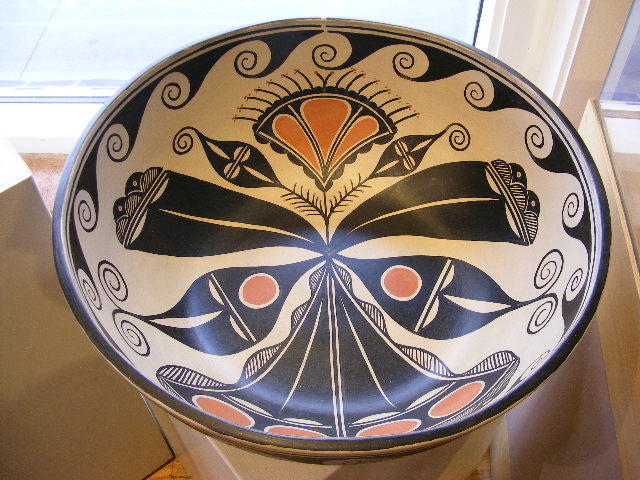
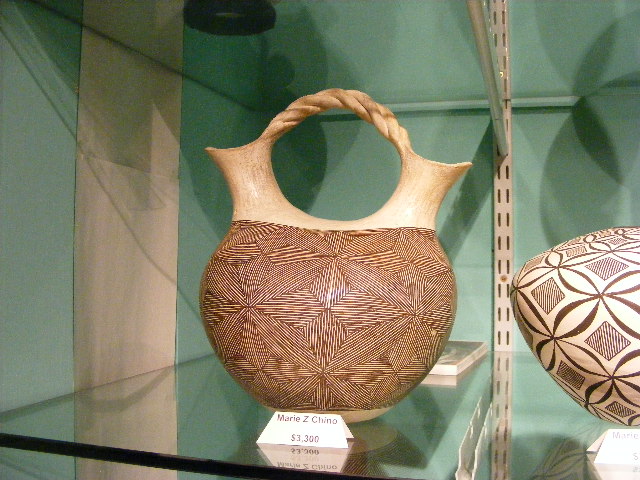
 In the summer of 2013, I was fortunate to travel to Santa Fe for a week long workshop with the Crizmac group, which focused upon Pueblo Pottery and Culture. We spent every day learning about various forms of art made in the pueblos, from weaving to pottery. Each day also help opportunities to create art. The group was made up of people in education, and we had a wealth of speakers and artists with which to work. The pottery above is an example of Pueblo Pottery and on our tour we will be delving deeper into the designs, motifs and symbolism of the rich pottery tradition.
 We also visited the Taos Pueblo, and were able to talk with many of the artists creating in their studios. On my trips, featuring this kind of personal connection to artists is very important.



 Authentic Travel and Tours, LLC