Author Archives: joanslack

Workshop AND Tour! Felting the Southwestern Landscape

Download the Brochure: Felting the Southwest Landscape

IMG_0212

Authentic Travel and Tours presents:

“Felting the Southwestern Landscape”

A  workshop and tour in Santa Fe, New Mexico

April 17-26, 2016


The landscape of southwestern New Mexico is rich in color, form and ever changing light, and beautifully lends itself to interpretation is art. In this workshop we will explore ancient petroglyphs and pueblos where the past and present merge, learn about the history and culture of Santa Fe and surrounding areas, and experience the rich and vibrant art scene with visits to artists and museums. All of this experience will be brought back to our hands-on felt-making workshop focused on “Felting the Southwestern Landscape”.

Felt-making is an ancient art, used for thousands of years to create clothing, shelter and tapestries. In this workshop we will use needle felting to create art by painting with the fiber. Your instructor, Joan Molloy Slack, learned to felt in Ireland, where she has led art and cultural tours for 15 years. After exploring the variety of ways of working with fleece, from Turkish rug making to creating hats and mittens, she became fascinated with the possibilities of using the fiber “pictorially”. She has taught workshops using this technique for over 14 years, and enjoys using symbols, mythology and personal imagery in her landscapes. In the workshop we will bring our experiences in the landscape into our felt-work, and Joan will discuss and demonstrate how to bring a personal, unique and exciting dimension to the landscape format.  DSC_0422-001


The work shop will be held at the Inn of the Governors, which is our accommodation as   well. Amenities include a lavish breakfast buffet, complimentary afternoon tea or      sherry, computer use and free wi-fi in lobby, heated outdoor pool, and lovely rooms    decorated with a southwestern flair. There is also an on-site restaurant and bar.

Located just 3 blocks from the Plaza, it provides easy access to the vibrant city center,  with shops, galleries, museums and restaurants to explore. (www.innofthegovernors.com)

Local guides will enhance learning the history through a walking tour, and several day trips to surrounding areas will be included. We will make frequent stops for photography and sketching the desert, mountains, gorges and architecture that will be used from inspiration for the workshop projects. Visits to ancient petroglyph sites and pueblos, Georgia O’Keefe country, weavers and fiber artist galleries, and the entrancing Chimayo church and village will be sure to inspire. There will also be time to visit the excellent museums of the area, such as the Georgia O’Keefe museum, Contemporary American Indian Art Museum, and the Museum of Folk Art. A typical day outing will begin with a visit to artist Roxanne Swentzell’s gallery (http://www.roxanneswentzell.net/) followed by the Poeh Center, which provides a visual description of pueblo life as well as an outstanding gallery of native art. We’ll travel the Rio Grande route, stopping in view of the mesa and Rio Grande gorge bridge to photograph and/or sketch. In Taos, we’ll visit the Millicent Rogers Museum and have some time to walk in the plaza and have lunch. Next, we will visit the Taos Pueblo and have a guided tour. We return on the High Road through the mountains (more photo opps!) and will spend time in the Spanish village of Chimayo, a sacred pilgrimage site. Robert at Ortega’s Weavers will demonstrate his art as we wind our way back to Santa Fe. A stop at a local winery for a wine tasting will complete the day.

One of our day trip guides will be Tom Gallegos, who also leads tours for the Story of New Mexico program at the University of New Mexico. He is awaiting publication of his first novel, Secrets to Tell about the early years of the Manhattan Project in Los Alamos. Tom is a native of Taos and currently lives in Santa Fe.

In the workshop, we’ll use the inspiration of our outings to begin the fiber “paintings” that we will develop throughout the week. All levels of experience are welcome. Needle felting is not difficult to learn, and one can expect successful results with no experience. However, those with felting experience will find the opportunity to delve deeper into new techniques, exploring composition, light, dimension and symbolism. We will begin with smaller pieces, experimenting with using specific themes, dimension and texture, and will develop these ideas into a large 18 x 24 landscape. All materials and equipment will be included.  If you have questions about the content of the class and tour please contact the instructor, Joan Slack, at 715-277-4224 or joanslack@wildblue.net  Preparatory materials will be sent upon registration. If you enjoy learning and creating while traveling, this is the trip for you!

Categories: Santa Fe | Tags: , , , , , , , , , , , , , , , , , ,

Some background on Irish High Crosses

 A bit about Irish Crosses

The cross and the dragon: the pagan roots of Irish crosses

Venceslas Kruta, an expert on Celtic art and civilization, explains the symbolism that underpins the Celtic cross

Monumental cross of Muiredach, Monasterboice, Co Louth. Photograph: John DonnellanMonumental cross of Muiredach, Monasterboice, Co Louth. Photograph: John Donnellan
So Celtic art can give the impression of being the artistic expression of all the peoples speaking the Celtic language. But the art of the ancient Celts was the result of a very long search for image-based expression, and the ideas common to the Celts since their origins vary according to the context. Venceslas Kruta, author of a new book, Celtic Art, explains its origins.

We see a lot of crosses and dragons in Celtic art – what do they have in common?

At first glance, very little. However, the Celts believed they were fundamental elements of a system, complex but consistent, which expressed their understanding of the universal order. The starting point is the notion of centre, a crucial concept for ancient Celts. It is here that the cosmic axis is supposedly found, imagined as a tree, preferably oak carrying mistletoe, whose branches support the canopy of heaven and the roots joining the underground world. It thus linked together three superimposed worlds: the Heavens, the Earth of the humans and the Underground world.

The representation of a world defined as four parts linked by a centre is one of the most frequent themes in Celtic art, isn’t it?

Yes, since the fifth century BC. Its simplest shape, a circle and a cross superimposed, is thus depicted on flat spoons most probably used for a ritual purpose, many of which have been found in Ireland. Their midpoint is sometimes pierced, suggesting their use during libations. This association of a cross, indicating the four major directions, and a circle, symbolising the limits of the territory that surrounds the central point, not only has a spatial value, but also a temporal one. The space defined by the journey of the sun and time can indeed not be separated: the four arms of the cross refer to the four daily events of the sun: from sunrise to sunset, including zenith and its equivalent underneath the horizon, but also the yearly events: solstices and equinoxes.

And what’s with the dragons?

The emblem of the pair of dragons, present on the Continent since the sixth century BC, decorated mostly weapons, especially sword scabbards of warriors in the fourth and third century BC. According to an account of the Welsh Mabinogi, such dragons would have been found on Excalibur, the legendary sword of King Arthur. The fight between the two dragons is figured in a most meaningful way on the cover/top of a remarkable artefact, the ceremonial jug from Brno, a masterpiece of Celtic art associated with the beginning of the bright season, the Beltane festival. It represents in a suggestive way most of the constellations that dominated in about 280BC the night sky on the day of this festival, as well as the one for both solstices and the Samain feast, beginning of the dark season.

What other images were there?

Several monuments have been discovered which marked the supposed place of the world axis, different for each community. This type of monument, known as their Greek name omphalos (umbilicus), has the shape of a pillar with decoration on each of its four faces. The most ancient one – the Pfalzfeld pillar in Rhineland, from the fifth century BC – and the most recent one – the Irish pillar of Turoe (Co Galway), probably from the first century BC – illustrate the evolution of this concept: from the representation of the divinity face wearing the mistletoe leaves, repeated on each side, to different images on each side, even maybe evocations of areas of the canopy of heaven that correspond to the four cardinal directions.

So this was about the Celts trying to impose some kind of order on their world?

The ancient Celts’ artworks are not made of borrowings or fortuitous inventions but are the expression of an extremely structured system of their idea of a universal order and its spatial and temporal understanding. Its dynamical aspect is fundamental. Its roots are ancient ones and its general elements are common to both continental and insular Celtic people. Those elements are one of the basis of their cultural unity.

And, finally, where does the Irish Christian cross come into all this?

The ultimate step of its symbolic representation is the Irish Christian cross, on which the pattern is arranged vertically. The Christ figure is in the centre – it has thus become the axis that links the heavenly, terrestrial and infernal worlds. However, on some of the crosses, solar patterns are depicted in place of the Christ. Even the pair of dragons can be found on some of them, which are supposed to have their annual fight. Such is the case of a cross of Gallen Priory (Co Offaly), where dragons coil up around a giratory pattern, a sort of curvilinear swastika, or on a Dromiskin cross (Co Louth). This confirms that the specific shape of the Irish cross is the result of a reuse of the old Image of the World in the Christian iconography. None of this is unusual, since the meaning of origin was fully compatible with the Christian doctrine. In Ireland, the image has thus been treated the same way texts from the traditional literature have been, turned away from their most obvious pagan aspects, and customised with a Christian aspect to best serve the new religion.

Venceslas Kruta is one of the world’s leading experts on Celtic art and civilisation and author of Celtic Art (Phaidon)

I am posting this thanks to an article in the Irish Times

Categories: Ireland | Tags: , ,

News Flash!! A new “art” addition to the Wild Atlantic Way tour!

In addition to our regular itinerary, we are delighted to announce that the Wild Atlantic Way tour will now also include an opportunity to sketch and paint with Dennis Robertson, watercolor artist, who will be joining us on the tour October 8-15. We will also be encouraging frequent photography sessions in this stunning landscape! See the details by clicking below!

Wild Atlantic Way Art Tour October 8-15, 2015

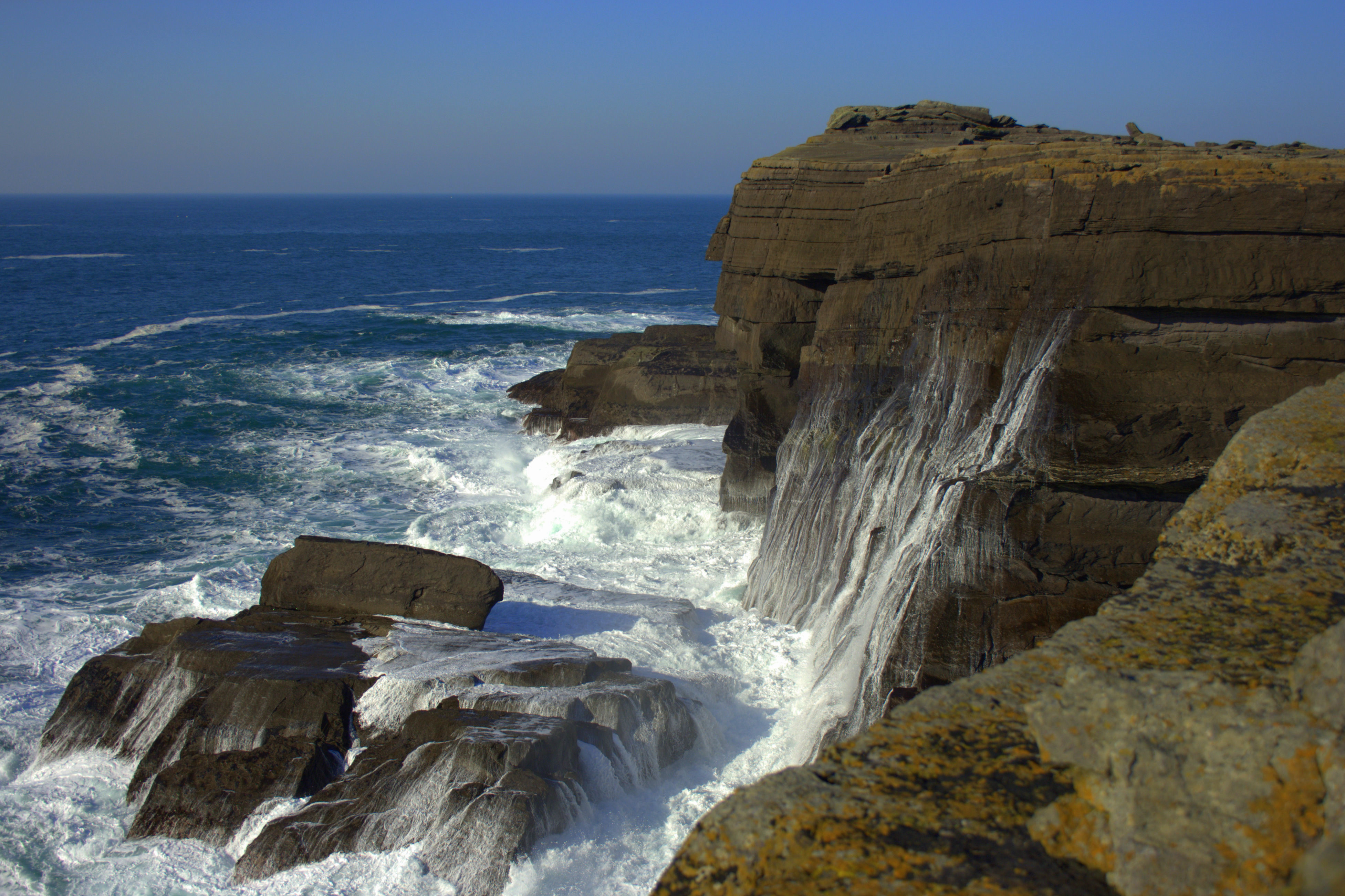
Ireland's Western Seaboard

Ireland’s Western Seaboard

Culloo Rocks and St Brendans well (8)

Culloo Rocks

DSCF6145

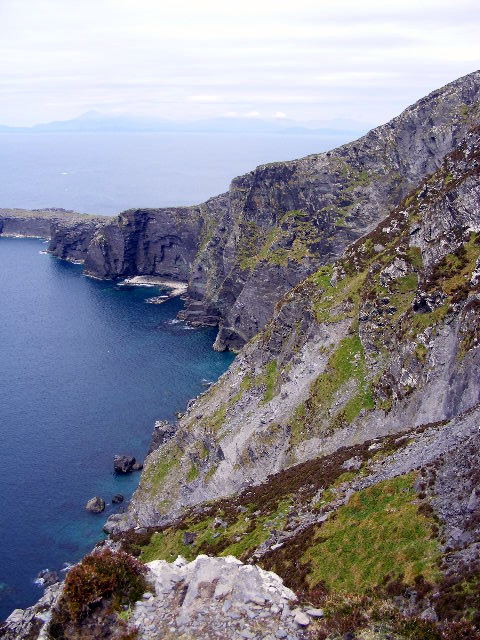
View from Healy PAss

Categories: Ireland | Tags: , , , , , , , , , , , , , ,

Blog at WordPress.com.